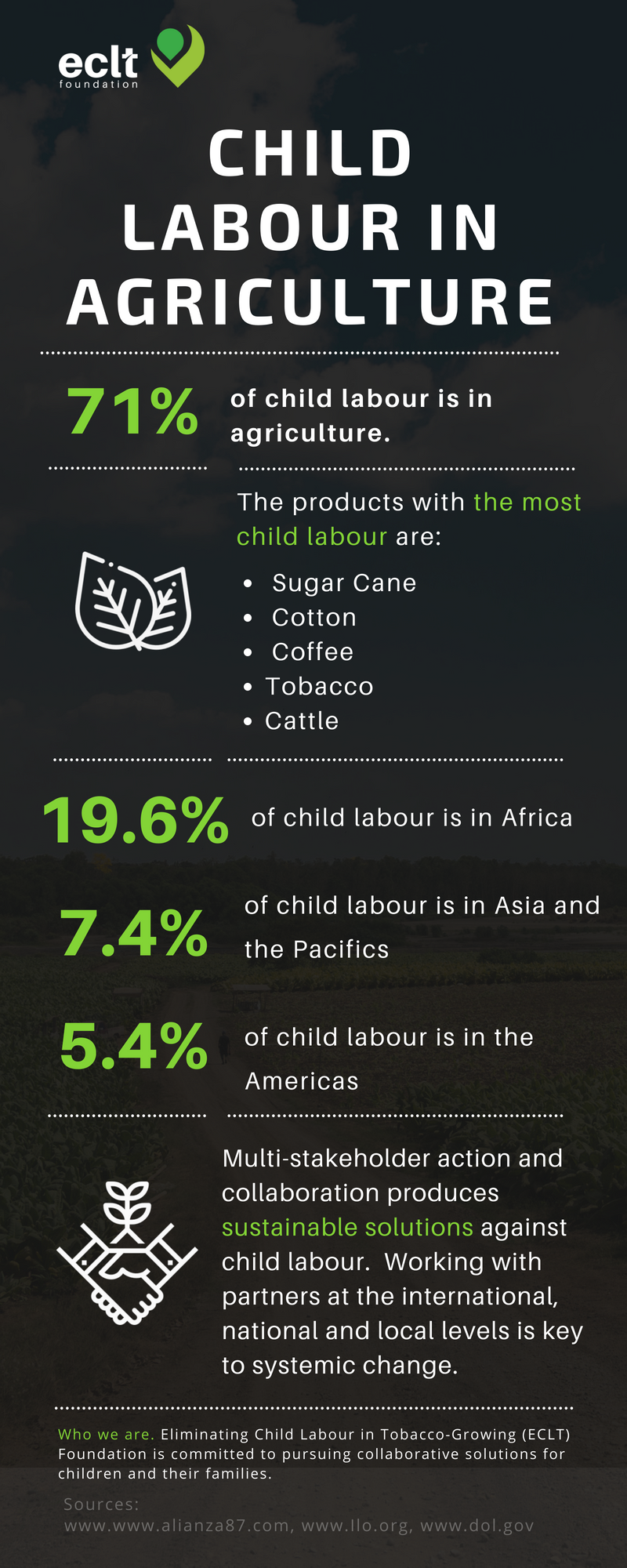




According to the ILO 152 million children, aged 5 to 17, are still in child labour. Agriculture is the most signiciant contributing sector, making up 71% of all global child labour, much of which is considered to be hazardous for their health, safety and development.
Which Industries
Child labour is a significant issue particularly in export crops and family farms. The US Department of Labour identified 17 goods produced with child labour. The 5 top agricultural products include:
- Sugar Cane
- Cotton
- Coffee
- Tobacco
- Cattle
Which Regions
Africa is the most affected area with 1 in 5 children involved in child labour. Asia and the Pacific follow with 7.4% child labour and the Americas with 5.3%. Child labour is not only in low-income countries, in fact half of affected children live in lower-middle and upper-middle income countries
What Can Be Done
Multi-stakeholder action and collaboration are effective ways to produce sustainable solutions against child labour. Working with public and private partners at international, national and local levels enables the removal of thousands of children from labour every year and is key to systemic change.